Clipboard
Clipboard
Some things old some things new at ISDE
RACE WATCH
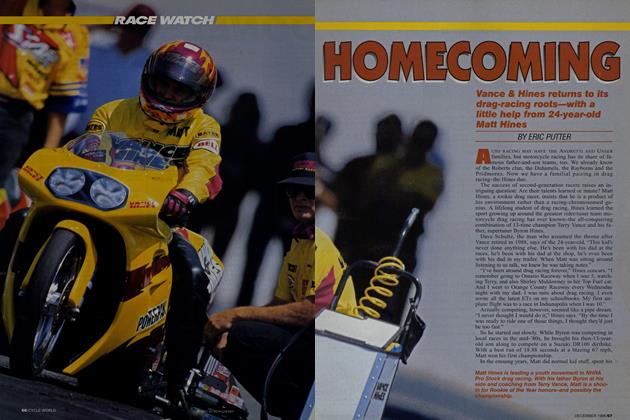
The 78th International Six Days Enduro will long be remembered as the Six Days of firsts. As in: first Six Days in South America (Brazil, specifically), first Six Days where it was actually hot (though the water park next to the parc ferme made cooling off fun) and the first Six Days with an overall individual winner, Stefan Everts, who had never competed in an off-road race before (though the Belgian does have seven world motocross championships on his resume!).
But in other ways, this ISDE was much the same as previous editions. Finland emerged victorious with the FIM World Trophy for the second year in a row and the fourth time in the past six years.
Team USA traveled to Brazil with high hopes for a podium finish. Racer Productions and GNCC Racing backed six of the best off-road racers in America, making the U.S. World Trophy team a sort of “dream team” of the kind that hadn’t been seen since 1996 when a similar effort paid off with third place. The sextet consisted of AMA off-road champions and GNCC contenders Ty Davis, Barry Hawk, Mike Kiedrowski, Mike Lafferty, Jason Raines and Rodney Smith.
Things went downhill almost immediately, however, Hawk’s bike suffering a meltdown in the very first special test. That wouldn’t have been so bad since Trophy team scoring is based on the five best team members’ results. Unfortunately, Smith ended up getting lost at the end of the first day, costing him-and the team-14 minutes that dropped the squad to 12th place, a hole that would be practically impossible to climb out of.
“Obviously, it put a damper on things right there,” admitted team manager Jeff Russell, a former ISDE racer himself. “I’m sure they’re all disappointed, as is everybody (connected with the U.S. effort), but they’re still out there plugging away. They’re not giving up.”
And that’s the sort of attitude-as well as luck-that typifies (plagues?) America’s World Trophy team yearly. With a best finish of second in 1982’s grueling run in the Czech Republic, riders wearing the stars and stripes nearly every other
year find the enduro gods frowning upon them.
For example, besides the first day’s miscues, there was the Davis saga. He started out the week worrying if he’d have a house to go home to, as the largest wild> fires in Southern California history roared dangerously close to his residence. All he could do was make frantic transcontinental phone calls to friends and neighbors back home, try to arrange for the creation of a buffer zone and keep his fingers crossed. Yet once the race started, he rode the way he normally does and consistently put in the fastest special-test times of
any of the 49 American riders (putting him fifth in the Over 175cc Two-Stroke class)-at least until the flu hit him. Davis struggled to even get out of bed on the second and third days, and predictably, his results suffered. Looking for a bright spot, though, he said, “I was real happy with my first-day performance because I really came out of the gate and was right there. I was stoked.” He finished the week 1 Oth in class, easily earning a gold medal.
But the rest of the World Trophy team seemed a bit off, judging by their test times. “I think they can ride better than they’re actually doing, I really do,” Russell observed. “And that’s not to be criticizing them or whatever, but I’ve seen Jason fall more this week than I’ve seen him fall all year-things like that-and I don’t know why, if they’re trying too hard or whatever.”
The team ended up clawing its way back up to a respectable seventh with Finland, Italy and France filling the podium. There is, however, hope for even better performances in the future. When Davis got sick, fellow desert racer Kurt Caselli stepped up with furious tests, and ended the week fastest of the Americans. He and the other three U.S. Junior World Trophy
team racers (Russell Bobbitt, Wally Palmer and David Pearson) finished ninth behind France, Finland and Italy. “After the first day, I knew I was up there with the top guys and I could run with them. I wasn’t so much surprised or happy, just kind of satisfied, which is what I wanted to do,” Caselli said of his gold-medalwinning performance (finishing eighth in class in only his second ISDE). “I think I could’ve done a little better. I also could’ve done a little worse.”
Then there was the trio of Americans riding under the GNCC banner. Newcomer Doug Blackwell, veteran Randy Hawkins (who earned his 13th gold medal in his 18th Six Days) and Robbie Jenks claimed runner-up among Club teams. Asked to examine the overall effort of the Americans, Hawkins put it bluntly: “We don’t know how to get on the edge for the tests. All these Europeans are super-fast for one lap (which is all that’s required for a test), and that’s it. Our group rides the pace they can ride 3 hours or 100 miles. The ability’s there; it’s just that we have a hard time with the mindset of turning it up to 110 percent for a test. That’s just something we don’t do enough of, and it shows.” -Mark Kariya